Why an Extra Step for go test?
The standard Go test runner, go test, is excellent for executing tests and providing immediate feedback to developers. However, it does not natively produce test reports in the JUnit XML format that Trunk Flaky Tests requires for ingestion and analysis. Therefore, an additional tool is needed to convert the output of go test into this compatible format. This intermediate step allows Trunk to accurately process your test results and identify flaky tests.
Setup steps
Work through the steps below in order. Once you’ve finished the last one, you’ll be ready to move on to configure uploads in CI.Generating JUnit XML Reports from Go Tests
Before integrating with Trunk, you need to generate a Trunk-compatible report. For Go,go test does not output JUnit XML by default, so you must use a tool to format it.
- go test + go-junit-report
- gotestsum
Update your existing Then pipe
go test usage to generate json and use go-junit-report to convert your standard Go testing output into JUnit XML.go test into the go-junit-report:Report File Path
The tools will write a JUnit test report to the file specified (e.g.,junit.xml or junit_report.xml). You’ll need this path when configuring uploads to Trunk.
Disable Retries
Regardless of the tool chosen, you need to disable automatic retries if you previously enabled them. Retries compromise the accurate detection of flaky tests.If you’re using a package like retry, disable it to get more accurate results from Trunk.
Try It Locally
Test Upload
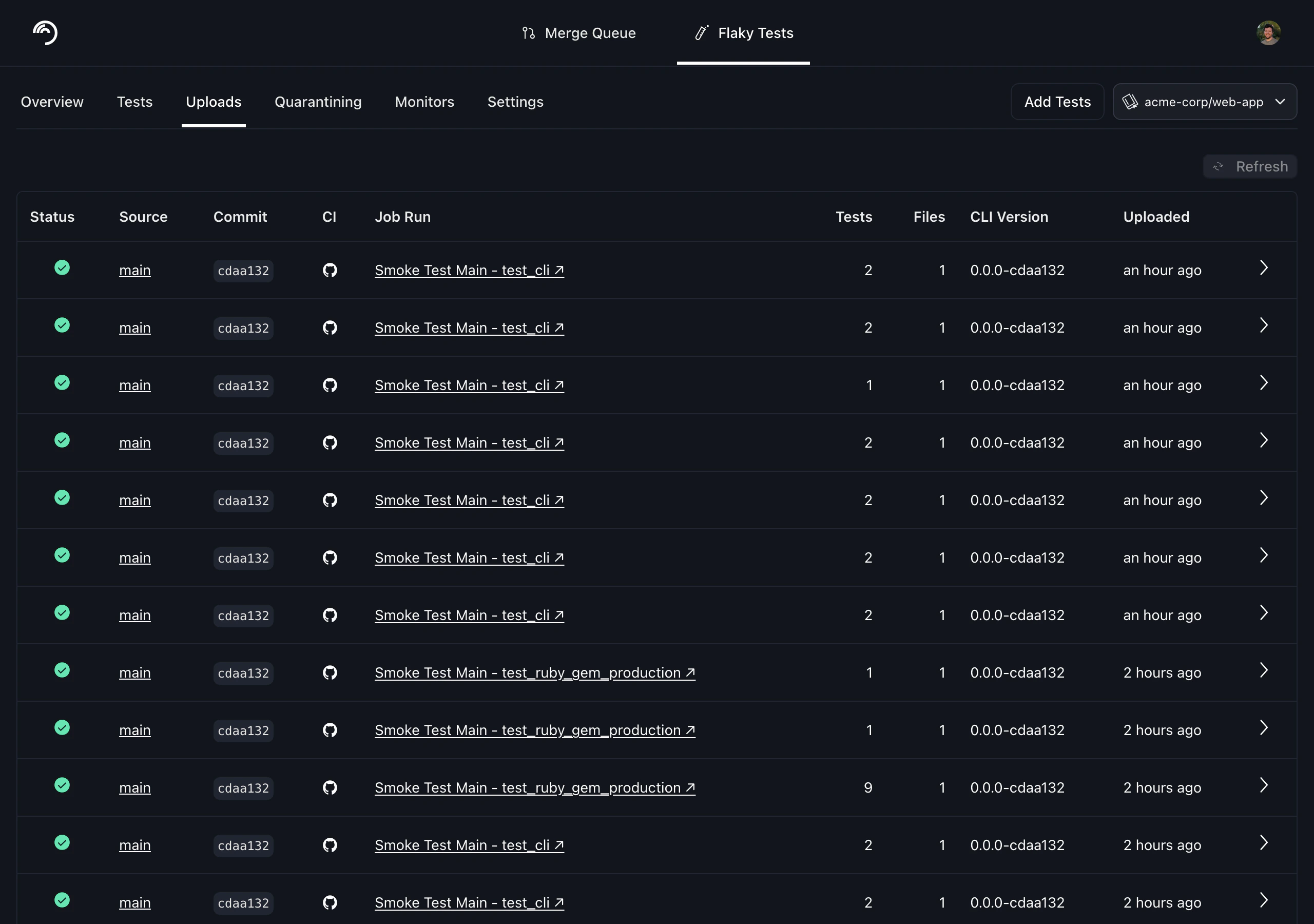
Before modifying your CI jobs to automatically upload test results to Trunk, try uploading a single test run manually. You make an upload to Trunk using the following command: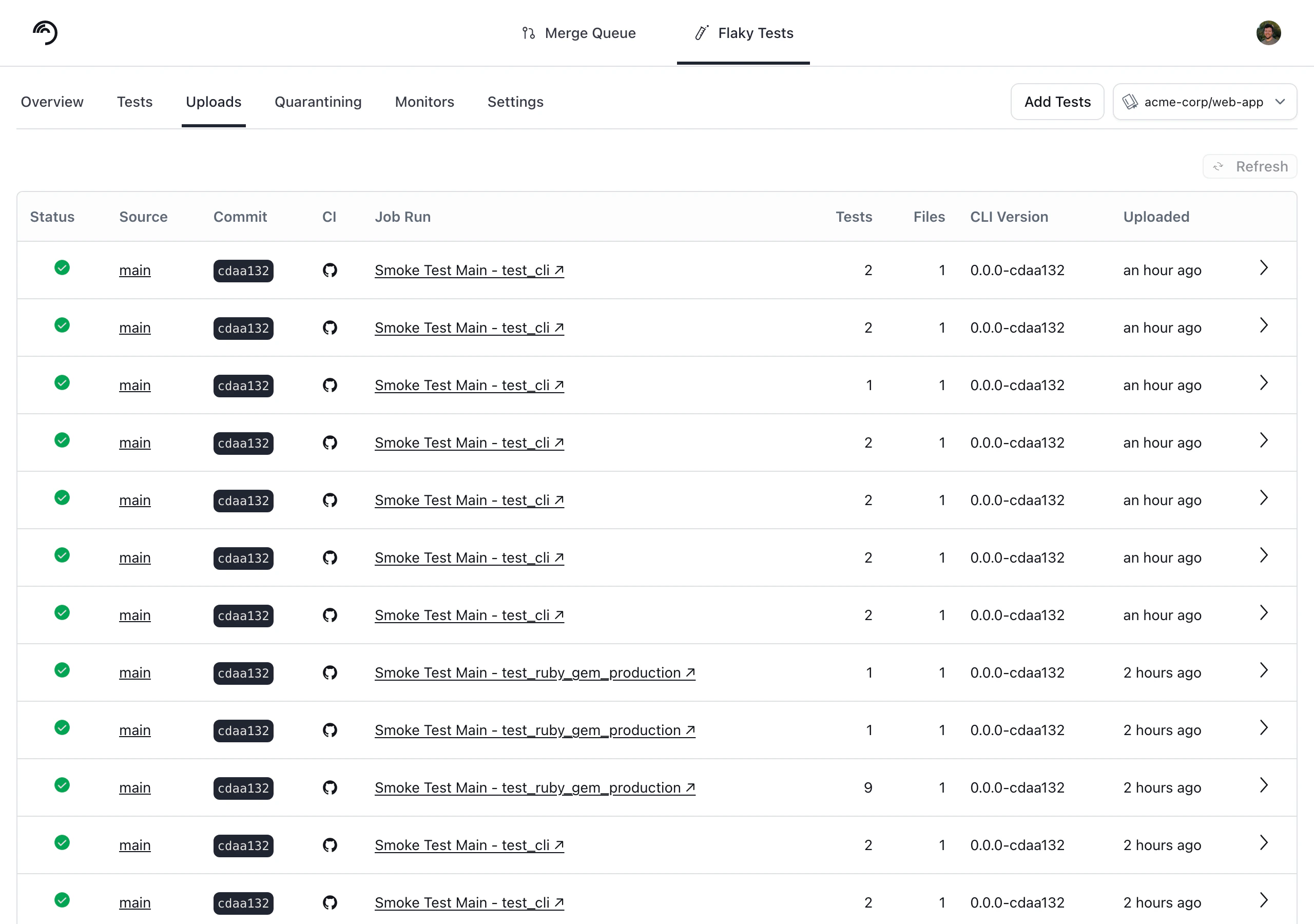
Next Steps
Configure your CI to upload test runs to Trunk. Find the guides for your CI framework below:
Azure DevOps Pipelines

BitBucket Pipelines

BuildKite

CircleCI

Drone CI
GitHub Actions

GitLab

Jenkins

Semaphore
TeamCity

Travis CI